What Is a Guest Room Management System (GRMS)?
A guest room management system (GRMS) is the in-room controller that brings a hotel room's lighting, air conditioning, curtains, and guest service signals under one coordinated system. Instead of separate switches, thermostats, and call buttons working in isolation, a GRMS ties them together and links the room to the hotel's front desk.
Hotels adopt a guest room management system for two reasons: guests get a simpler, more responsive room, and operators cut the waste that comes from heating or cooling empty spaces. This guide explains what a GRMS controls, how it talks to the front desk, and where it sits in the wider building automation picture.
What Does a Guest Room Management System Control?
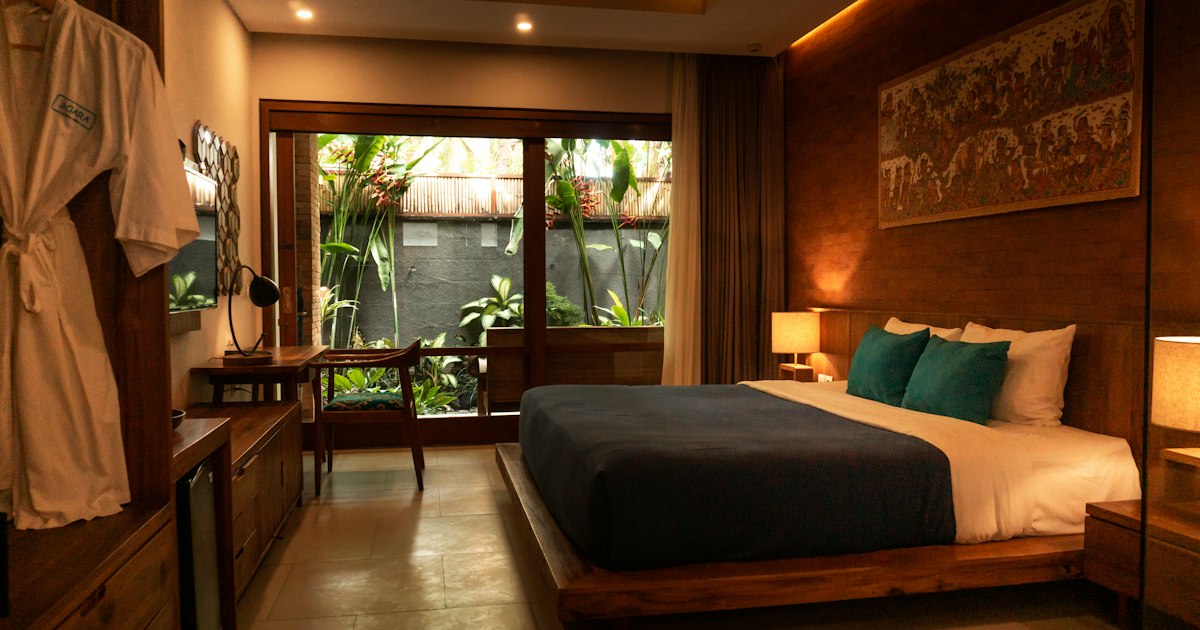
A guest room management system controls the devices a guest touches most: lights, temperature, curtains or blinds, and the signals that tell staff a room needs attention. HVAC accounts for 40 to 50% of a hotel's total energy consumption (WIPO, 2024), which is why climate control is the heart of any GRMS.
Lighting is the most visible function. The system groups fixtures into scenes, so a single bedside button can set a welcome mood, a reading level, or full off at the door. Occupancy and door sensors let the room dim or switch off automatically when no one is present.
HVAC control is where the system earns its keep. A GRMS reads occupancy, usually confirmed by the door lock and a motion sensor, then relaxes the temperature setpoint while the guest is out and restores comfort on return.
Curtains and motorized blinds round out the comfort layer. Guests open or close them from a bedside panel, and the system can stage them with lighting scenes. Service indicators, including Do Not Disturb and Make Up Room, replace the paper door hanger with a signal staff can read from a corridor or a dashboard.
How Do Lighting, HVAC, Curtains, and Service Signals Work Together?
Putting lighting, HVAC, curtains, and service indicators in one system means they share the same sensors and logic rather than each reacting on its own. When a guest taps a bedside control, the room responds as a whole: lights set a scene, blinds adjust, and the climate holds at the comfort setpoint.
The shared backbone is what makes this coordination possible. Smart G4, for example, builds its guest room controllers on the sBUSPro protocol, a wired bus that lets panels, sensors, and relays exchange signals over a common line instead of point-to-point wiring to every device. Bus wiring like this is a practical fit for both new construction and retrofits, because adding a device means tapping the existing line rather than pulling a fresh cable to the panel.
Coordination also prevents the room from working against itself. A standalone thermostat might keep cooling a room with the balcony door open; a connected GRMS can pause HVAC when a door sensor reports the opening. That logic is simple to state and hard to achieve without one system holding the full picture of the room.
How Does a GRMS Connect to the Hotel PMS and Front Desk?
A GRMS connects to the hotel's property management system (PMS) through an integration layer, so a single action at the front desk changes the room's state. Check a guest in, and their room wakes to a welcome setting. Check them out, and the room drops to an energy-saving baseline without anyone walking upstairs.
This link turns the guest room into a source of live information for operations. Service signals flow the other way: when a guest sets Make Up Room, housekeeping sees it on a dashboard or mobile view and can route staff efficiently. Do Not Disturb is respected automatically, which reduces awkward knocks and complaints.
The PMS connection also underpins billing and reporting accuracy. Because the system knows whether a room is sold, occupied, or vacant, it can apply the right temperature policy to each state. That is a cleaner approach than a blanket setback that either wastes energy on sold rooms or leaves vacant ones running at full comfort.
What Are the Benefits for Comfort, Energy, and Staff?
The clearest payback from a GRMS is energy. Occupancy-based controls can save 10 to 30% of HVAC energy (U.S. Department of Energy), and since HVAC is the single largest load in most hotels, trimming it moves the whole energy bill.
For guests, the benefit is a room that feels considered. Lights reach a comfortable level without hunting for switches, the temperature is right on arrival, and a single panel replaces a drawer full of remotes. Reliable Do Not Disturb and clear service signals remove small frustrations that show up in reviews.
For staff, the system cuts wasted trips and guesswork. Housekeeping prioritizes rooms by live status rather than a printed list, maintenance sees faults reported from the room controller, and the front desk resolves comfort requests without dispatching someone to fiddle with a thermostat. The result is fewer motions per task and a clearer view of what each room needs right now.
Where Does a GRMS Fit in the Building Automation Stack?
A GRMS is the room-level layer of a hotel's building automation stack. Above it sits the building management system (BMS), which runs central plant such as chillers, boilers, pumps, and common-area air handling. The PMS sits alongside as the commercial system of record for reservations and guest status.
Each layer has a clear job. The BMS makes sure the building produces heating and cooling efficiently; the GRMS decides how much of that each occupied room actually needs; the PMS tells the GRMS which rooms are sold and who is in them. Well-designed hotels let these layers share data so decisions made at check-in ripple down to the room and back up to the plant.
Standards help these pieces interoperate and stay efficient. ASHRAE Standard 90.1, the long-standing benchmark for commercial building energy efficiency, sets requirements covering lighting controls and HVAC that guest room automation is expected to meet (ASHRAE). A GRMS is how a hotel delivers those room-level controls in practice.
If you are scoping a project, start by mapping which rooms you want to automate and what your existing wiring allows, then compare bus-based systems like Smart G4's sBUSPro platform against the cabling and integration effort of alternatives. That mapping exercise, more than any single feature list, tells you what a guest room management system will cost and save in your property.
Frequently asked questions
What does GRMS stand for?
GRMS stands for guest room management system. It is the in-room automation controller that manages lighting, temperature, curtains, and guest service signals, and connects those controls to the hotel's property management system.
What is the difference between a GRMS and a BMS?
A GRMS controls conditions inside individual guest rooms, such as lights and temperature. A building management system (BMS) oversees central plant and shared systems like chillers, pumps, and common-area HVAC across the whole property.
Does a GRMS save energy?
Yes. HVAC is the largest energy load in a hotel, and occupancy-based control through a GRMS can save 10 to 30% of HVAC energy (U.S. Department of Energy) by setting rooms back when guests are out.
How does a GRMS connect to the front desk?
A GRMS integrates with the property management system (PMS). Check-in activates the room, check-out sets it back to an energy-saving state, and service signals like Make Up Room appear on staff dashboards.
Can a GRMS work with an existing hotel's wiring?
Many systems, including Smart G4 products built on the sBUSPro protocol, are designed for both new builds and retrofits, using bus wiring that reduces cabling compared with running separate lines to every device.