Smart Curtains and Blinds Control in Hotel Rooms
Hotel smart curtains are motorized drapes or blinds wired into the guest room management system, so a guest can open them with a bedside button and staff can close every shade on a floor from one dashboard. The payoff is real: a field study found automated shades cut energy use by about a quarter while guests preferred them to ordinary blinds.
This guide walks through the practical side of motorized shading in guest rooms. You will see the motor and blind options worth considering, how scenes tie curtains to lights and temperature, how the hardware connects to a GRMS, how guests actually operate it, and what the comfort and energy numbers look like.
What motor and blind options suit hotel smart curtains?
Guest rooms usually run on one of three motor types: tubular motors inside a roller shade, track motors that drag a drape along a rail, and tilt motors for horizontal blinds. Low-voltage DC tubular motors are the most common choice for hotels because they are quiet, compact, and simple to wire into a room controller.
Roller shades and sheer or blackout drapes on a motorized track cover most design briefs. Many rooms use a dual setup: a sheer layer for daytime privacy with a view, and a blackout layer for sleep. Each layer gets its own motor so a scene can move them independently.
Motor torque has to match the curtain. A heavy blackout drape on a long track needs more pulling force than a light roller blind. Undersized motors stall, overheat, or wear out early, so the shade weight, track length, and fabric all feed into the motor spec before anything is ordered.
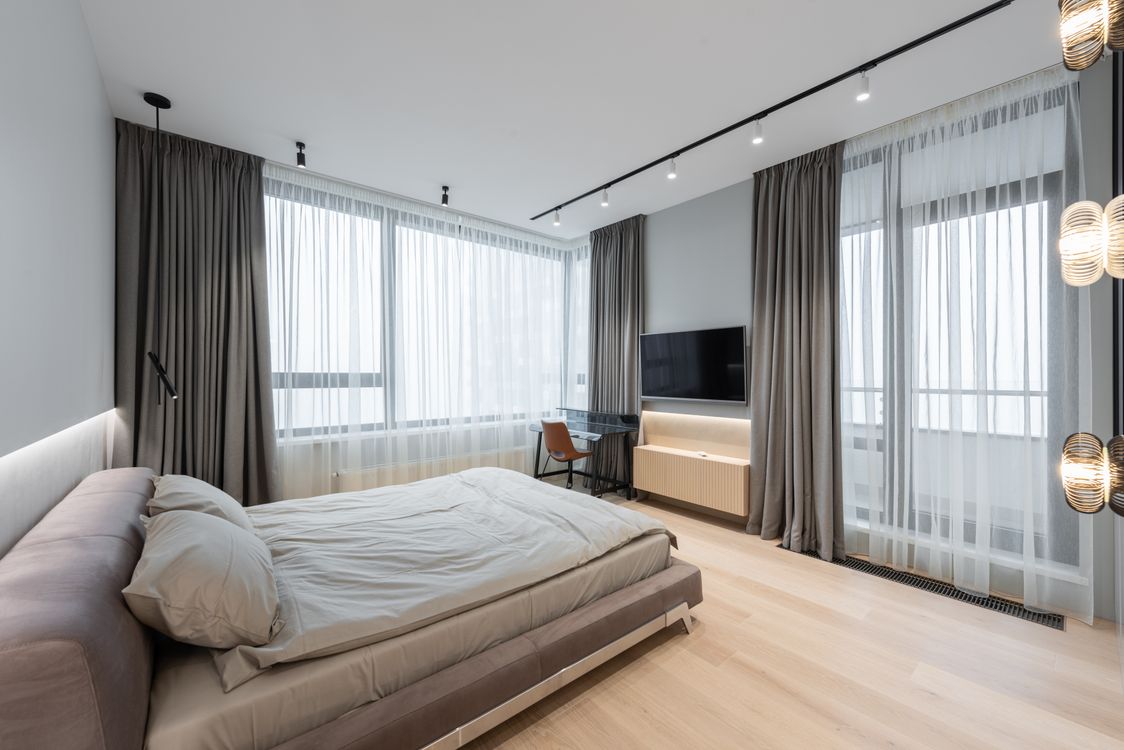
Noise matters more in a bedroom than in an office. A guest woken by a grinding motor at a scheduled sunrise scene will not book again. Quality hotel motors are rated for low decibel operation and a soft start and stop, which also protects the fabric and the track.
How do wake, sleep, and privacy scenes use the curtains?
Scenes turn a single button into a coordinated action across the room. A wake scene can lift the sheer shade part way, raise the lights slowly, and nudge the temperature up, all from one press. The curtain stops being a standalone gadget and becomes one instrument in the room.
A sleep scene reverses it: the blackout layer closes fully, lights dim to a path light, and the thermostat shifts to a night setpoint. A privacy scene closes the sheer layer during the day so a guest can undress or rest without pulling cords. Because these scenes live in the room controller, housekeeping and front desk staff can trigger or reset them too.
Scenes also respond to inputs beyond a button. An occupancy sensor can close shades when a guest leaves, and a check-out signal from the property system can open every curtain on a floor for cleaning. These links are what separate a true GRMS from a pile of individual smart devices. Smart G4 handles this on the sBUSPro bus, where lighting, climate, and curtain modules share one logic engine, so a scene can span all of them without a separate hub per function.
For teams building this logic from scratch, our complete guide to smart lighting control for hotels covers how lighting scenes are structured, and the same scene framework drives the curtains.
How does motorized blinds control wire into the GRMS?
Motorized blinds control connects to a GRMS through a curtain module or a dry-contact relay that sits between the shade motor and the room controller. On an sBUSPro system the motor links to that module, and the bus carries commands from switches, scenes, and the property management system to the right room.
The wiring falls into two camps. A hardwired low-voltage motor runs its power and control back to a module on the bus, which gives the most reliable, maintenance-light result. The alternative uses an RF or battery motor paired with a bridge to the bus, which saves cable in a retrofit but adds batteries to change and a wireless link to maintain.
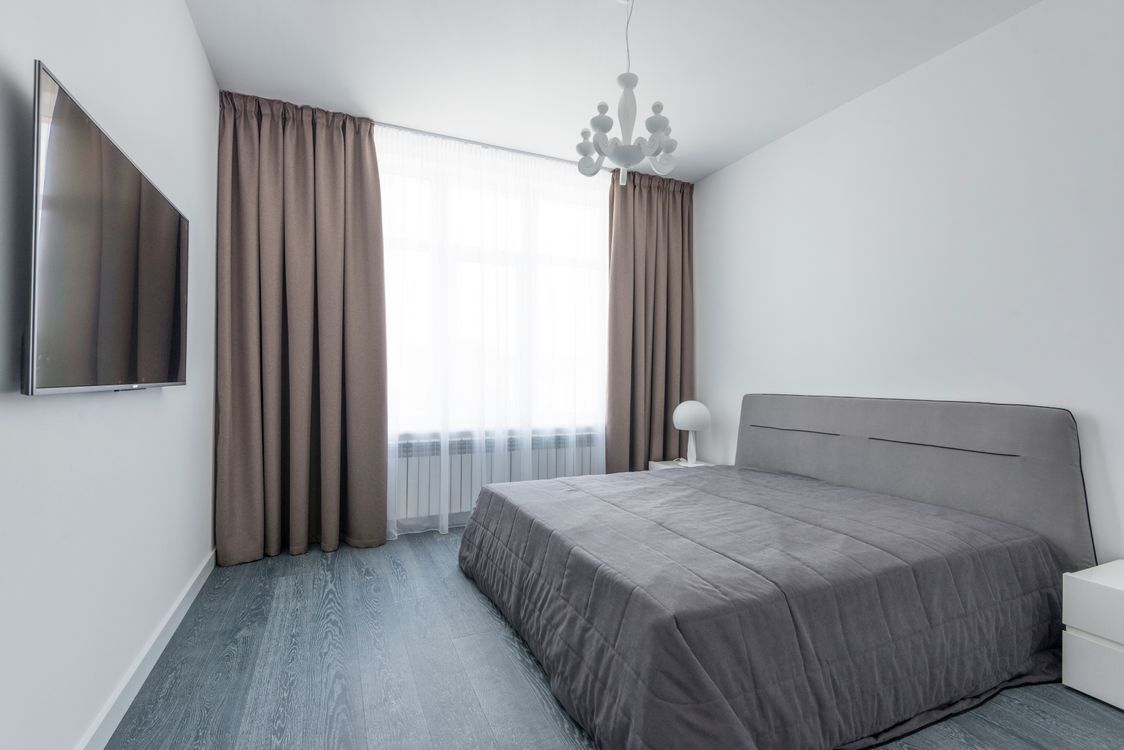
The cleanest time to do any of this is during rough-in. Running motor power and bus cable to each window head before the walls close costs far less than fishing cable later. If you are working in an occupied or finished property, our guide to retrofitting a GRMS into an existing hotel explains how to minimize the disruption.
One practical note from real installs: label the curtain module per window and confirm the open and close directions during commissioning. A motor wired in reverse turns a sunrise scene into a blackout, and tracing it room by room after handover is slow and avoidable.
How do guests control the curtains day to day?
Guests should reach the curtains three ways: a physical control near the bed or door, an in-room touch panel, and a mobile app. The physical control is the one that truly matters, because a tired traveler at midnight should never have to find, download, or log into anything to close a blind.
A bedside switch or panel button is the daily workhorse. One press opens, another closes, and a scene button handles the common combinations. The in-room panel adds finer positioning and ties the curtains to lights and climate on one screen. A mobile app is a bonus layer for guests who want it, not a replacement for the switch.
Clarity beats features here. A button labeled with a curtain icon tells a guest exactly what it does. Hiding shade control three menus deep in an app frustrates people and generates front-desk calls. The best rooms make the obvious action obvious and keep the app for guests who go looking.
Staff get their own view. From a central dashboard, the front desk can open all curtains on a floor for housekeeping or close west-facing shades across the building during a hot afternoon, which feeds directly into the energy story below.
What are the energy and comfort benefits of automated shading?
Automated shading saves energy by blocking solar heat gain in summer and holding warmth in winter, which eases the single largest load in most hotels: heating, cooling, and ventilation. In a 2023 field study, automated window shades reduced energy use by about 25% across both heating and cooling seasons, and 80% of occupants preferred them to the existing manual blinds (Illinois Institute of Technology, 2023).
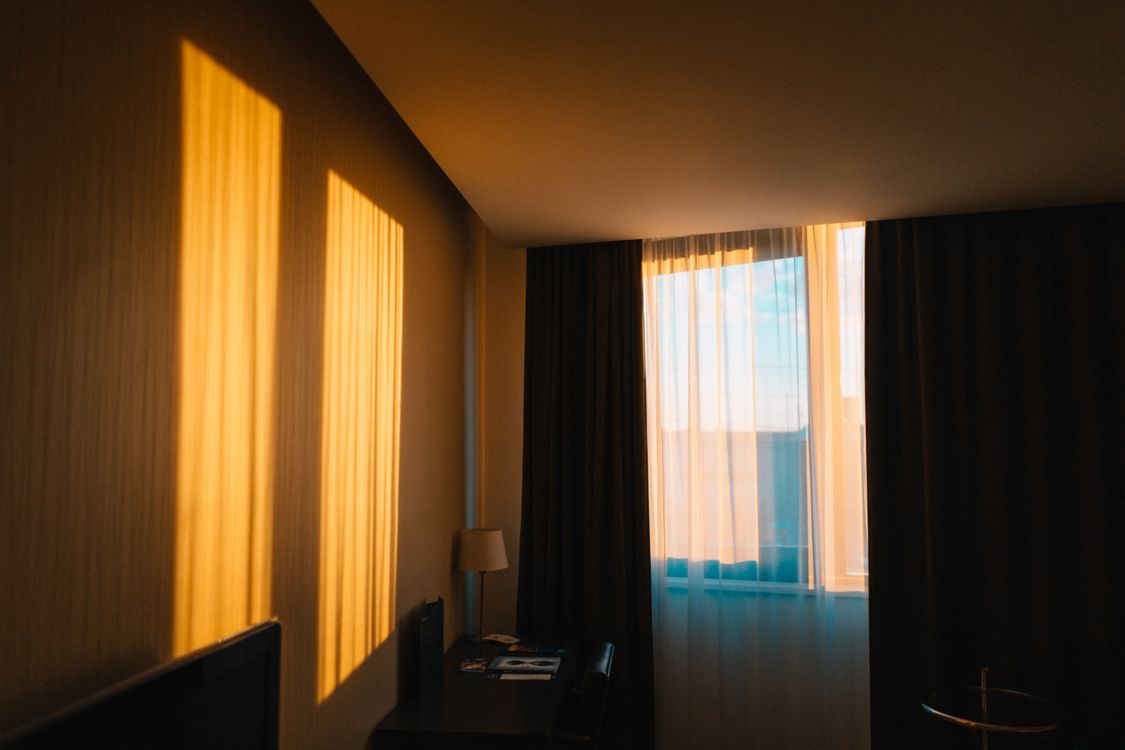
The mechanism is straightforward. Sunlight pouring through a west-facing window on a Riyadh afternoon forces the air conditioning to fight the sun. A shade that closes automatically when the room is empty, or when the sun hits that facade, cuts the heat before it enters. HVAC is the heaviest consumer of energy in a typical hotel, so trimming that load has an outsized effect on the bill.
Comfort and energy pull in the same direction. A guest walking into a cool, dim room on a hot day is comfortable, and the room got there by shading itself rather than by overcooling. The high occupant preference in the study reflects that: people like a room that manages its own light without a cord to wrestle.
Shading also protects the asset. Controlled sunlight means less fading of carpets, furniture, and artwork, which stretches refurbishment cycles. The curtain earns its keep three ways at once: lower energy, happier guests, and slower wear on the interior.
Putting it into a room specification
If you are specifying a new build or a renovation, write the shade requirement into the room controller spec now rather than bolting it on later. Decide the motor type per window, confirm torque against the actual fabric weight, and reserve the bus wiring at rough-in. Then map your wake, sleep, and privacy scenes before commissioning so the installer configures them once. Talk to your GRMS supplier early about how their curtain modules behave on the bus, and ask to see a single mocked-up room running the scenes end to end before you commit to a whole floor.
Frequently asked questions
What are hotel smart curtains?
They are motorized curtains or blinds connected to the guest room management system. Staff and guests can open, close, or position them using wall switches, bedside panels, or a mobile app instead of a manual cord or wand.
How does motorized blinds control connect to a GRMS?
A shade motor receives commands through a relay or a bus module tied to the room controller. On an sBUSPro system the motor links to a curtain or dry-contact module, which the GRMS triggers from switches, scenes, or the property management system.
Do motorized curtains in hotels actually save energy?
Yes. A 2023 Illinois Tech field study measured about a 25% reduction in energy use across heating and cooling seasons with automated shades, because the shades block solar heat gain in summer and retain warmth in winter.
Can guests still control smart curtains manually?
Yes. Well-designed rooms keep a physical bedside or wall control so guests never depend on an app. The motor responds to a button press, a panel, or a scene, and some systems also allow a gentle manual pull to nudge the curtain.
Is it hard to add motorized shading to an existing hotel?
It is harder than wiring during construction because you must route motor power and bus cable to each window. Low-voltage battery or RF-linked motors can reduce cabling, but a hardwired motor tied to the GRMS gives the most reliable control.